Demonstrations

15 Jan. '12: Judge holds confession of Palestinian minor admissible, although it was obtained through breach of his rights

Image

On 9 January 2012, Israeli Military Youth Court judge Major Sharon Rivlin-Ahai held that the confession given to the police by I.D., a 14-year-old Palestinian boy from a-Nabi Saleh, interrogated on suspicion of stone throwing, was admissible. The judge admitted the confession even though the minor had been questioned in breach of his rights under Israel’s Youth Law, whose spirit, according to the Military Appeals Court, applies also in adjudication of Palestinian minors in the military courts.

I.D. was arrested at home in the middle of the night. He was not allowed to rest, eat, or go to the bathroom and, from the morning, was interrogated for more than seven hours. He was interrogated, without his parents present, by three or four interrogators, only one of whom is a trained youth interrogator – although even he is not currently functioning in that capacity and has not undergone retraining following the changes in the Youth Law made in 2008.
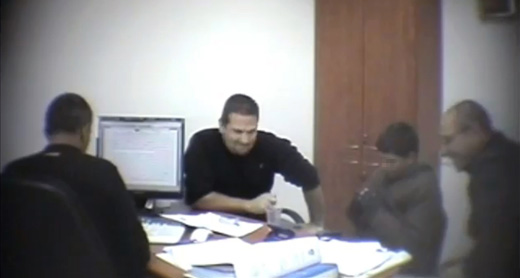
I.D.'s interrogation, taken from video footage of the interrogation by the police.

Despite the fact that I.D.’s attorney contacted the interrogators before the interrogation began, I.D. was only allowed to consult with him five and a half hours of interrogation. One of the interrogators read I.D. his rights three times, each time omitting the right to remain silent and emphasizing that he must tell the whole truth.
Under interrogation, I.D. admitted to throwing stones and incriminated two persons from his village in organizing demonstrations and inciting villagers to throw stones.

I.D.’s attorney complained that his client’s confession had been obtained through use of improper means and should not be allowed into evidence. As a result, the court held a trial-within-a-trial, in which the judge ruled that the confession was admissible.

In her decision, Judge Rivlin-Ahai accepted some of the defense’s claims regarding the nature of the interrogation but held, nevertheless, that ruling the confession inadmissible was not justified. Regarding the interrogation in the absence of I.D.'s parents, she held that, as I.D. had given information on many fellow villagers, she accepted the interrogator’s statement that “it is highly likely that, even if the parents had come, he would not have permitted them to be present during the interrogation.”

As for the refusal to allow the minor to meet with his attorney, the judge ruled that, “from the moment that the interrogation began and it became clear that the defendant was providing valuable information on the involvement of many other persons, the decision to prevent the meeting with the attorney for several hours cannot be viewed as patently unreasonable.”

On the decision not to wait for the attorney's arrival to begin the interrogation, although he had notified the interrogators that he was on his way, Judge Rivlin-Ahai said that the interrogators should have waited, but “it is hard to say that the decision not to wait, when the defendant had already been in detention since night-time and was waiting for the interrogation to begin… was so unreasonable and unjust that it critically harmed the fairness of the interrogation.”

With respect to I.D.’s tiredness, the judge contended that video footage of the interrogation indicated that "it was not tiredness of the kind that would prevent a substantive interrogation.”.

In her summary, the judge emphasized that, “each of the circumstances… could, in certain circumstances, each on its own and certainly cumulatively, lead to the conclusion that the fairness of the interrogation was harmed to the core… In the unique concrete circumstances existing here, I did not find this to be the case.”
The only essential flaw that the judge found in the interrogation was that the interrogators did not properly clarify to I.D. that he had the right to remain silent, instead giving him the impression that he was obliged to tell them everything he knew. On this point, the judge stated in her decision:

As noted, the flaw in the defendant's interrogation is serious. On the other hand, I have concluded that this flaw did not have a real effect on the manner in which the defendant gave his confession. Therefore, I believe that the infringement of the defendant’s rights in the specific case did not result in greater than necessary violation of his right to criminal due process, to the extent that would nullify his confession and, as a result, impede revelation of the true facts and advancement of the public interest in combating criminality.

The testimonies of interrogators of the SHAI (Judea and Samaria) Police Department in the trial-within-a-trial indicated that the interrogation of I.D. is the norm in the Department's handling of Palestinian minors. Under cross-examination, the police officers said that Palestinian minors are regularly interrogated without their parents in the room, by interrogators who have not been trained as youth interrogators, and in a manner that breaches Israel’s Youth Law. However, since most files involving minors end in plea bargains, judges generally do not have the opportunity to give their opinion on the conduct of the interrogation and to alter the police’s unlawful practices.

In I.D.’s case, the court had a rare opportunity to provide the minor with real protection and to establish a rule that would protect the rights of all Palestinian minors interrogated by the police. It is highly regrettable that the judge chose to admit the confession into evidence rather than send a clear message to the authorities that the public interest actually lies in the proper protection of the rights of minors.

Suggested items

Torture and Abuse

New report: Living Hell: Sexual violence, starvation and systematic abuse – at least 84 Palestinian prisoners have died in Israeli torture camps

Today (Tuesday), B’Tselem released new figures and testimonies revealing the extent of violence employed against Palestinians in Israeli prisons, which function as a network of torture camps: systematic abuse, including physical and psychological violence, inhuman conditions, deliberate starvation and denial of medical treatment, resulting in many deaths. Some released prisoners recounted undergoing or witnessing sexual violence.B’Tselem Executive Director Yuli Novak: “The Israeli regime has turned its prisons into a network of torture camps for Palestinians, as part of a coordinated onslaught on Palestinian society intended to destroy their existence as a collective. The genocide in Gaza and the ethnic cleansing in the West Bank are the most blatant manifestations of this policy. Despite mounting evidence and numerous reports on Israel's torture camps, the international community continues to grant this regime full immunity – effectively legitimizing the continued torture, oppression and ethnic cleansing of Palestinians and abandoning the victims.”The new report lists 84 Palestinians (including one minor) who died in Israeli torture camps since October 2023, detailing each prisoner’s name, place of residence (50 from the Gaza Strip, 31 from the West Bank and 3 citizens of Israel) and the facility in which they died. As of January 2025, Israel is still holding 80 of the bodies and refusing to return them to their families. There are indications that the number of Palestinians who died in Israeli torture camps is higher. However, the report notes only those for whom B’Tselem was able to verify the information.The report shows that the policy of abuse is declared, deliberate, and is coming from the very top. National Minister of Security Itamar Ben Gvir, who is in charge of the Israel Prison Service, brags in TV puff pieces and on social media about the inhuman treatment of Palestinians in these facilities. He is not alone. The entire Israeli system has rallied to shield the people designing and implementing this policy from any accountability.The report is based on the extensive analysis provided in our August 2024 report “Welcome to Hell”, on updated figures, and on the testimonies of 21 Palestinians released from Israeli prison facilities in recent months. It also draws on the work of Israeli and international human rights organizations that monitor these facilities.In September 2025, about 10,900 Palestinians were being held in Israel’s torture camps, in appalling conditions and under a regime of extreme physical and psychological abuse. As of January 2026, after the Israel-Hamas deal that included the release of some prisoners was completed, about 9,200 Palestinians remain in Israeli prisons.B’Tselem stresses that the incarceration project in which more than 800,000 Palestinians have been held in Israeli prisons over the years, many without trial, is a key tool Israel uses to fragment and oppress Palestinian society.

20 January 2026

ראר'ב סמחאן ודודו מוחמד סמחאן. צילום: איאד חדאד, בצלם, 30.3.22

A Routine Founded on Violence

Soldiers handcuff and arrest intellectually disabled teen (13) for two hours, and then arrest two of his relatives and abuse them

On Monday, 28 March 2022, at around 7:00 P.M., a group of about eight Palestinian teens from the village of Ras Karkar, in Ramallah District, used lasers to provoke soldiers and Special Police Unit officers who were at the entrance to the village. The teens fled into the village and the forces chased them in a vehicle, capturing Ragheb Samhan (13), who has an intellectual disability. They assaulted him, tied his hands with pieces of cloth, blindfolded him and took him away on his own, without informing anyone. After about two hours, the officers brought Ragheb back to the entrance to the village and released him there, handcuffed and blindfolded. About half an hour later, some 15 soldiers and police officers arrived at Samhan’s house, where several family members and village residents had gathered to greet him. They arrested two of his relatives, Muhmmad Samhan (19) and Nader Nofal (18). They blindfolded the two young men, tied their hands behind their backs and drove them to a nearby military camp, interrogating them along the way. The forces held Samhan and Nofal in the vehicle for about two hours before transferring them to a trailer, where soldiers beat and kicked them and swore at them. After about five hours, at around 3:00 A.M., the two were released at the entrance to their village. They were summoned for an ISA interrogation a week later, after which they were released without charges. This was yet another routine incident in the life of a Palestinian family in the West Bank. Soldiers and police officers arrested a teen with an intellectual disability without even bothering to inform his parents. They held and interrogated him in an unknown place for two hours, without an adult acting on his behalf, and then arrested two members of his family, holding them for about five hours and abusing them. This is the unbearable ease with which Israel runs the lives of millions of people, almost never holding anyone accountable In a testimony he gave B'Tselem field researcher Iyad Hadad, Muhammad Samhan (19), a resident of Ras Karkar, described how both he and his nephew Ragheb Samhan were arrested: On Monday, 28 March 2022, at around 7:00 P.M., I was at home near the a-Sadiq mosque in the village center. I looked out the window and saw two patrol vehicles enter the village – a regular military jeep and a white GMC, which I recognized as a Special Police Unit (SPU) vehicle. It looked like they were chasing children who’d been aiming laser beams at them at the entrance to the village, along Route 463, and run back into the village. I think there were about seven or eight children there. The vehicles stopped outside our house, and soldiers and police officers got out and chased the children among the houses. A few moments later, I heard a kid shout, "It wasn't me, it wasn't me!" Two officers led him towards the jeeps. They hit and kicked him and then tied his hands in front of his body and covered his eyes with a piece of cloth. The boy kept shouting. I didn’t recognize him. The officers didn't wait around. They immediately put him in the SPU car and both vehicles left the village. I went outside to find out who they'd arrested and was told it was Ragheb, my sister's son. He's 13 and has a mild intellectual disability. I immediately went over to my sister's house. I asked her husband, Tawfiq Samhan (35), where Ragheb was and he said he’d gone to get water from the grocery store. I told him it looked like the military had arrested Ragheb. We went out to search for him together. We got into my car and headed towards the Ni'lin Checkpoint to find out where they’d taken Ragheb. On the way, at the entrance to Ras Karkar, we saw a military patrol vehicle. We asked the soldiers where Ragheb was and explained that he’s a child with special needs. The officer said, "We arrested him because he pointed a green laser beam at us and threw stones." He demanded to see our IDs and a photo of Ragheb. We showed him the IDs but didn't have a photo, so I drove back and got one. We showed it to the officer, and he confirmed they were holding him. We got into a loud argument with him and started shouting. In the end, the soldiers gave us a number we could call to make inquiries, and left. Meanwhile, more people from the village heard the shouting and gathered there. We called the number the soldiers gave us, but no one answered. At around 9:30 P.M., we were still by the roadside when soldiers arrived with Ragheb and let him go. He still had a blindfold and zip ties on. When we saw him like that, we were furious. It was a very inhumane sight. The child was crying, and was scared and confused. We started swearing at the police, cursing their attitude and their inhumane behavior towards a boy with a disability. We cut the zip ties, took the blindfold off and took him home. Ragheb was unable talk and tell us what happened. He just kept repeating a few sentences, over and over: the police had asked him who was throwing stones and he’d told them he didn't know. We went back to my sister's house, and people from the village came to welcome Ragheb back. About half an hour later, I was standing outside the house with some people when about 15 soldiers arrived with an SPU officer, who immediately started swearing at us. Tawfiq heard the shouting and came outside. He swore back at the officer and told him that what they'd done to his son was inhumane. The officer ordered us to show him all the children who live in the house. We called Ragheb's brothers to come out: Yasser (10), Yusef (3) and 'Abdallah (1). The officer looked at them but still wouldn’t leave our family alone. Then he announced that I was under arrest along with my second sister’s son, Nader Nofal (18). They led us to the GMC vehicle, tied my hands behind my back with pieces of cloth and covered my eyes. After they put me inside, they also tied my legs. On the way, the officers asked me who'd been pointing a laser at the forces. I told them I didn't know. The vehicle stopped, and they kept asking me questions inside for half an hour. They didn't ask Nader anything. Then they took me out of the vehicle, and the officer put me on the phone with someone from the ISA who introduced himself as Abu Rami, the area coordinator. He told me he'd questioned me before, when I was arrested during the protests against the war in Gaza a year ago. I told him I didn't remember him. He accused me of pointing a laser at the soldiers. I told him I’d been at home and the soldiers had taken me from there. He suggested I collaborate, but I refused. Then he told me to come to him for questioning on Sunday at 9:30 A.M. After I talked with him they put me back in the vehicle, which drove off and then stopped again. I rubbed my head against the seat and managed to shift the blindfold. I saw that Nader and I were alone in the vehicle, inside a military camp. We stayed in the vehicle for about two hours and then some soldiers came, took us to a trailer and left us there, handcuffed and blindfolded. The soldiers turned on the air conditioning, and it was freezing. One of them asked me, "Are you Hamas or Fatah?" I said Fatah, and then he punched me in the stomach. I nearly choked. He cursed me and Fatah and Hamas. Some other soldiers brought in a loudspeaker and played a song loudly. One of the soldiers moved the speaker closer to my ear. After about half an hour, the speaker went off and someone kicked me in the leg. They swore at me the whole time. One of the soldiers cracked a whip near me to scare me. Another soldier held scissors and pushed them against my thighs. They didn't penetrate the skin, but it was still very painful. The soldiers started making bleating and braying sounds, like goats and donkeys. All that went on until someone came in, probably an officer, and asked me who'd hit me. I said it was the soldiers, but I didn't know exactly which one because I couldn't see. I heard him scolding the soldiers for hitting me. After another 10 minutes, they put Nader and me in the vehicle, still handcuffed and blindfolded. We drove until they dropped us off at the entrance to our village. One of the soldiers took off our blindfolds and handed us a written summons. He read it to us, and we understood we were being summoned to a meeting with the ISA on Sunday, at 9:00 A.M., at Ofer Prison. At that point, it was 3:00 A.M. Nader Nofal (18) told B'Tselem field researcher Iyad Hadad what happened during his arrest: The soldiers mocked us. I think they were filming us for TikTok, because when they came near us, it sounded like they were talking on the phone and broadcasting it live. They cursed us and our families and also hit and kicked us. One of them cracked something that sounded like a whip next to us, to scare us. One of the soldiers also stabbed me in the shoulder and legs with something sharp. I don’t know if it was a spike or a nail. It was very painful and every time he did that, I shouted. The soldiers made animal noises. It was a few hours later that someone who was in charge, probably an officer, arrived. He asked Muhammad who’d beaten us, but he didn’t know because our eyes were covered. The soldiers took us to a military jeep, with our hands tied and eyes covered. They let us out at the entrance to our village, without taking our restraints off. We managed to take them off ourselves because they were made of cloth and easy to untie. Nofal went on to describe his ISA interrogation at Ofer Prison a few days later: On Sunday, 3 April 2022, at 9:00 A.M., I went with Muhammad to a meeting with the ISA at Ofer Prison. We waited for about half an hour and then were put in a small room, which looked like a solitary confinement cell on the ISA wing. We waited there until 11:00 A.M., and then Muhammad was taken in for a meeting with the ISA that lasted about 40 to 60 minutes. According to what he told me, they mainly asked him who’s been throwing stones and pointing lasers at the soldiers, and questions like that. I went in after Muhammad. My meeting lasted about two hours and I was asked about the same things. The interrogator also suggested I collaborate. He promised me an entry permit to Israel and a good salary. He said: “I’ll call you every two or three days and I want you to answer and tell me what’s going on in the village.” I refused, and then he threatened to revoke my father’s work permit. He added that in future, if I had a problem with the soldiers, he wouldn’t take pity on me and would send me straight to prison. The interrogator banged on the table to scare me because I refused to collaborate. When the conversation was over, he ordered me to leave.

17 May 2022

חיילים במהלך פשיטה על מחנה הפליטים אל-ערוב במחוז חברון. צילום: אן פק, אקטיבסטילס, 24.5.13

A Routine Founded on Violence

Occupation routine: Soldiers assault 16-year-old at al-'Arrub R.C., break his jaw and arrest him for 26 days

On Sunday, 29 November 2020, at around 8:00 A.M., two military jeeps entered al-'Arrub R.C. Earlier that day, two settlers who were traveling on the road near the refugee camp were slightly injured by stones. As the jeeps entered, children and youths threw stones at the soldiers. The soldiers fired tear gas canisters and stun grenades. One jeep followed the crowd and hit 16-year-old Muhammad Muqbal. He fell but then got up and kept running until the soldiers caught him. A soldier hit him in the jaw, and he fell again. Another soldier kicked him all over his body as he lay on the ground. The soldiers then handcuffed him and put him in the jeep. One of the soldiers kept beating him on the car ride. Muqbal and some other youths who were detained in al-'Arrub R.C. that day were taken to the Etzion police station, where they waited for hours and were interrogated intermittently. Muqbal’s basic rights were violated during his interrogation, which ended with him signing a document written in Hebrew, a language he does not understand. After the interrogation, the soldiers took the youths into a kitchen. One of the soldiers told them they could sleep on the floor. They were given no food or drink during this whole time. At 3:00 A.M., soldiers came and took Muqbal to Hadassah Ein Karem Hospital in Jerusalem, where he was handcuffed to the bed. Soldiers posted at the door to his room initially refused to let his father in to see him. Muqbal had jaw surgery two days later, and the next evening, 4 December 2020, he was taken to Megiddo Prison. On 6 December 2020, the military prosecution indicted Muqbal on two counts: Throwing a Molotov cocktail in March 2020 and stone-throwing on the day he was arrested. The prosecution asked to have Muqbal remanded to custody until the end of proceedings, but the military judge rejected the motion. The prosecution’s appeal was dismissed, and Muqbal was released on 25 December 2020, after a NIS 3,000 (~ USD 900) bail was posted. On 8 March 2021, Muqbal was convicted in a plea bargain. The first count of the indictment was dropped, and he was sentenced to 26 days in prison - equal to the number of days he had already served. The bail was converted to a fine. Muqbal’s case is not an aberration. It reflects the violence the occupation brings to the everyday lives of young males throughout the West Bank. Israel arrests hundreds of Palestinian minors each year, systemically and systematically violating their rights throughout the entire process - from the arrest itself, through the interrogation and in the legal proceedings at the Juvenile Military Court. While Israel boasts laws and procedures purportedly in place to safeguard the rights of minors, these are no more than a smokescreen designed to legitimize the severe harm caused to minors. Muhammad Muqbal described his arrest and 26-day incarceration to B’Tselem field researcher Musa Abu Hashhash on 28 December 2020: I ran fast, and one of the military jeeps hit me in the shoulder. I fell down and then got up and carried on running. I went into a house that had its door open. Three soldiers ran after me. One of them caught me and hit me more than once on the left side of the jaw. It hurt badly, and I fell on the floor. Another soldier attacked me and started kicking me in different parts of my body. The wound in my face was bleeding. I got up, and then they led me to the road, tied my hands behind my back and had me sit down in front of a closed shop. A few minutes later, they put me in a jeep and blindfolded me. I sat on the floor of the jeep. There were four soldiers in it, and one of them hit me, kicked me and spat at me more than once. The jeep drove for about 500 meters and stopped at the entrance to the refugee camp, by the gate. The soldiers took me out there, near the electric gate, and from under the blindfold, I saw four detainees that the soldiers had arrested before me, standing at the entrance. A man in military uniforms approached me and said he was “Captain Karam.” I’d heard about him. I know he’s the ISA officer in charge of our refugee camp. He hit me in the face with the butt of his rifle. He moved my blindfold and took a picture of me and the rest of the detainees. After about five minutes, we were all taken in a large military vehicle to the settlement of Carmei Tzur. We were kept there in the courtyard for about two hours. My jaw hurt, and it was bleeding. Then they put us in another military vehicle and drove us to the police station in Etzion. We got there in the early afternoon, and the soldiers took us into the courtyard. In the later afternoon, they started interrogating us, one by one. I was third in line. Before the interrogation, a lawyer spoke to me on the phone and told me I could exercise the right to remain silent and not to be afraid. An interrogator by the name of Yusef interrogated me. He accused me of throwing a Molotov cocktail at an Israeli bus a few months ago and throwing stones at military vehicles. I denied both accusations, and after ten minutes, the interrogator took me out to the yard. They left me there until the evening. Then they took me back into the interrogation room, and a different interrogator questioned me. He yelled and said I was lying. He started asking: “So the soldiers and camp residents who saw you do it are liars, and only you’re right?” I continued denying it, and the interrogator wrote down what I said and ordered me to sign my statement. He told me I was signing what I had said. I signed and gave my fingerprints, and my photo was taken. At around 9:00 P.M., after they’d finished questioning the other four detainees, the soldiers took us to a place that looked like a kitchen, in front of the yard, and one of them told us we could sleep on the floor. That’s when a military doctor came and gave us a coronavirus test and asked if we had any illnesses. We sat on the floor in the kitchen for about six hours. They didn’t give us food or drink, and we weren’t able to sleep either. My jaw hurt a lot. We were handcuffed and blindfolded the whole time, and time went by slowly. At around 3:00 A.M., the soldiers took me out of the kitchen. The others had been taken before. I was taken in a small vehicle with a four-soldier escort. I was sitting in the front seat, between two soldiers. We drove to Hadassah Ein Karem Hospital. I knew where I was by the sign at the entrance. I got there at about 4:00 A.M. I got tested for coronavirus again, and then I was given painkillers. Two soldiers escorted me. One of them was the one who attacked me during the arrest. I was taken into a room, and one of the soldiers tied my left hand to the bed. The pain was so bad I couldn’t sleep. In the evening, I was taken for X-rays and then brought back to the room. There was a patient from Jerusalem in the room, and he told me he’d heard the doctors saying in Hebrew that I was going to need surgery. After sunset, in the evening hours, my father came and tried to get in the room. He called out to me and asked me how I was feeling. The two soldiers kicked him out. He tried to get to the door every once in a while to ask me how I was doing and told me not to worry. The next day, Tuesday, I was taken into another room, and the soldiers were replaced. The new soldiers let my father come into the room for a few minutes and talk to me. My father told me he had signed consent for my surgery and told me it would be on Wednesday. On Wednesday, I was taken into the operating room, and the surgery started at around noon. It took four hours, and after, they took me back to the room. I found out the doctors had put in a fastener to put my jaw together on the left side. It stops me from chewing or moving my jaw. On Thursday, at around 8:00 P.M., I was taken in a vehicle used to transport detainees to Megiddo Prison with my hands and feet cuffed. In the prison, they took me into a room where I stayed by myself for four days. After that, I was taken into a room with five underaged detainees. I stayed at Megiddo for 18 days. I got soup to eat and painkillers. There were three court hearings that I attended through video. A lawyer represented me. Then, I was transferred to Ofer Prison, where there was a final hearing on 24 December 2020, which I also attended through video. It lasted more than half an hour, and the judge asked me what I would do when I went back home. I told him I’d go back to school. I couldn’t understand the interpreter that well because the connection wasn’t good, and I didn’t understand what the judge decided. They took me back to a room at Ofer, and I stayed the night there. In the morning, it was Friday, they told me I was getting released that day. I later found out I’d been released on a 3,000 NIS bail. That day, 25 December 2020, before noon, a military jeep took me to the al-Jib checkpoint, and my father was waiting for me there in a friend’s car and took me home. I still can’t eat properly, and I’m getting liquids only. A doctor at the hospital in Hebron told me it would take two more weeks before they remove the metal fastener. Muhammad’s father, Munir Muqbal, 47 and father of six, said in a testimony he gave to B’Tselem field researcher Musa Abu Hashhash on 6 December 2020, while his son was held in custody: The day after the arrest, in the early afternoon, I got a call from Hadassah hospital and got asked to go there to sign the approval for Muhammad’s surgery. They sent me an invitation, and I sent it to the Coordination and Liaison Administration. At 5:00 P.M., I got an entry permit. I went straight to Hadassah Hospital and went up to the seventh floor. I saw Muhammad in one of the rooms and tried to go in, but two soldiers who were in the room barred me from entering. I stood in the doorway and asked Muhammad how he was feeling, and he said he was okay. I tried to go in the room several times, but the two soldiers wouldn’t let me. I managed to take a picture of Muhammad, who was tied to the bed. I stayed in the hallway all night and tried to get some sleep on one of the chairs there, but I wasn’t able to. On Tuesday, he was taken to a different room, and the two soldiers who had been there were replaced by others. One of the new soldiers let me in and talk to him for a few minutes. I managed to take a photo of him too. His left hand was tied to the bed, and a patient who was in the room with him told me his surgery was scheduled for Wednesday. On Wednesday, at around noon, he was taken to the operating room. The surgery lasted four hours, and after that, he was brought back to the room, and I managed to talk to him for about 15 minutes. The doctors told me they had put in a jaw fastener, so he would have a hard time eating for quite some time. I expected Muhammad to stay in the hospital for further treatment, but to my surprise, the very next day, Thursday, in the evening, the soldiers took him to Megiddo Prison. I went home and got updates about what was happening to him from a lawyer with Defense for Children International. His mother and I are very worried because they took him back to jail right after the operation.

21 March 2021