Detainees & Prisoners

13 Dec. '11: Military court partially acquits Palestinian due to forced confession

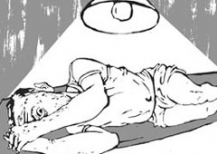
Illustration: Ishai MishoryAyman Hamidah, a resident of al-‘Eizariya in al-Quds District, was charged with several offenses that were committed in 2009, according to the indictment, among them firing at a border policeman. The indictment was based in part on a confession he gave following some forty days of interrogation by the Israel Security Agency (ISA). On 30 November 2011, the military court in Ofer ruled that his confession was inadmissible since it had not been given willingly, and acquitted him of the counts that were based solely on the confession. The court's decision is unusual. Research by human rights organizations has revealed that ISA interrogators have used methods similar to those used against Hamidah, as he described them in court, against hundreds of Palestinians over the years.

Hamidah was accused of 17 offenses, among them firing at a Border Police post, dealing in weapons, car torching, and planning a shooting attack. Some of the counts – including several involving dealing in weapons – were based solely on a confession that he gave in late November 2009, after the ISA had interrogated him for about forty days. In the court hearing, Hamidah, who was represented by attorney Tareq Barghout, testified that he had confessed only due to the interrogators' pressure. The court then held a trial within a trial to investigate the claim, at which testimonies were heard from Hamidah, the ISA agents who had interrogated him, and the police officers who had taken his confession.

In his testimony, Hamidah described the harsh interrogation he had undergone. In the first interrogation, he said, the interrogators told him they were allowed to keep him in detention for more than six months, and that they were the ones who would determine if he would meet with his attorney. Hamidah also contended that the interrogators refused to give him the medication he needs for psychiatric problems. As a result, he suffered from anxiety, muscle contractions, shortness of breath, and other symptoms, and even tried to commit suicide several times during the period of interrogation.

Hamidah also claimed that an interrogator threatened to detain his mother and sister if he didn't confess, and to spread a rumor in his village that he was collaborating with the ISA. During the period of his interrogation, he was transferred to a cell of informers – Palestinian prisoners who work for the ISA and try to get a detainee to talk – for 15 days. Hamidah related how his cellmates had beaten him and whipped him with an electrical cord.

At some point during the interrogation, Hamidah’s brother was brought into his prison cell. His brother told him that their sister had been detained and pressured Hamedah to confess, so that he and his sister could be released from detention. When asked by the judges, he said that these comments by his brother led him to confess.

The president of the military court, Lt. Col. Zvi Lekach, who wrote the principal opinion of the court, held that Hamidah’s confession was not given of his free will. The judge based his decision on Hamidah’s testimony and on the memorandum of interrogation made by the interrogators. The judge stated four primary reasons for reaching his conclusion:

  1. 1. The interrogation was prolonged and the interrogators made it clear to Hamidah several times that it would continue until he confessed. Lt. Col. Lekach ruled that, “this systematic line of interrogation is utterly inconsistent with the right to remain silent and effectively denied him that right entirely.”
  2. 2. Lt. Col. Lekach doubted the testimony of the ISA interrogators, who described an interrogation that was “almost idyllic, in which the atmosphere was outstanding in its positivity, without exception.” The judge held that, “this almost perfect and idyllic description appears to us an exaggeration that does not correspond to reality. Also, their testimony before us revealed events that did not at all accord with this idyllic picture. During the interrogation, the defendant suffered a shaking seizure, to the extent that the interrogator decided to return him to his cell. The memorandum of interrogation indicates that, more than once, he cried, was angry and shouted, and that his interrogators also shouted at him.”
  3. Lt. Col. Lekach accepted Hamidah’s claims regarding violence against him while he was in the cell with the informers, and held that his testimony was convincing, while the prosecution had not presented any evidence to contradict it.
  4. 4. Lt. Col. Lekach ruled that Hamidah had decided to confess primarily due to pressure by his brother: “We are convinced that what the defendant’s brother said and the pressure regarding the family led him finally to a psychological breaking point.”

For these reasons, the judge concluded that the confession was not freely given:

The distress of a person who has been subjected to interrogation for a cumulative period of forty days, during which he was also apparently beaten, is very great. When such a person has to choose between [sic] the distress of a relative who is in detention, and moreover, hears that his sister is also being harmed due to his not cooperating with his interrogators, one can assume that the pressure he faces is unbearable. . . We were convinced that for the defendant, who is responsible for the safety of his family members according to the society in which he lives and resides, it was pressure that he could not withstand, and which added to the long period of pressure to which he had been previously subjected.

The court held that the methods used against Hamidah “certainly cumulatively, violate the defendant’s rights and his free will. We believe the chronology of this interrogation raises at least a reasonable doubt, if not more so, that the defendant's statements were not given freely and willingly.”

The court convicted Hamidah on six counts, among them shooting at a person and attempting to cause death, based on other evidence in the case. The court acquitted him on several counts of dealing in weapons, membership in an unauthorized organization, and shooting at a person, after holding that the prosecution’s evidence, considered together with Hamidah's testimony, did not prove his guilt.

The court’s decision is unusual. First, judges have almost no opportunity to examine defendants' confessions, since the vast majority of indictments filed in military courts end in a plea bargain. In 2010, for example, only 82 trials were held among the more than 9,500 files. Consequently, the prosecution almost never has to provide evidence proving guilt, and the defendants are not given the opportunity to claim their confessions were given following the use of forbidden methods. Second, where defendants did raise such a claim, the court rejected the claim and convicted them.

The prohibition on torture and ill-treatment is absolute and applies in all circumstances – even during war and in the battle against terrorism. It is one of the rare prohibitions in international law that is absolute and cannot be balanced against other interests. Despite this, over the years, the ISA has used, and continues to use, interrogation methods that constitute ill-treatment and in some cases also torture, in order to force detainees to confess to the offenses attributed to them.

In 1999, Israel's High Court of Justice held that the ISA’s routine methods when interrogating Palestinian residents of the Occupied Territories were not lawful. The High Court ruled that ISA interrogators were not authorized by statute to use these methods, though there might be cases in which such use would not be a violation of statute, where it is found retrospectively that the use was made in a “ticking-bomb” case.

Following the court’s judgment, the use of torture and ill-treatment during interrogation declined substantially. However, research by B'Tselem and HaMoked: Center for the Defence of the Individual (the reports "Absolute Prohibition", from 2007, and "Kept in the Dark "from 2010), which included testimonies and affidavits of some 200 Palestinians who had been interrogated by the ISA at various times and in various detention facilities since 2005, indicates that interrogees are still exposed to mental and physical ill-treatment during ISA interrogations. The interrogations included, inter alia, detachment from the outside world, binding in painful positions, humiliation and threats against interrogees and their families. The organizations also documented the inhuman detention conditions, which are used to pressure the interrogee. These conditions include narrow cells, sleep deprivation, inedible food, exposure to extreme temperatures, and horrible hygienic conditions, such as denying showers and the possibility to change clothes.

From the beginning of 2001 to March 2010, more than 700 complaints of ill-treatment by ISA agents were filed with the State Attorney's Office by Palestinians who had been interrogated. Not in a single case did the State Attorney's Office think the claim warranted a criminal investigation.

B'Tselem has written to the inspector of complaints by interrogees in the ISA, demanding an investigation into the suspicion that agents violated the law in the course of Hamidah's interrogation.

Suggested items

Torture and Abuse

Backed by the System

Joint report with HaMoked, Center for the Defence of the Individual Sleep deprivation; prolonged binding; verbal and sometimes physical abuse; exposure to heat and cold; poor, meager food; small, foul-smelling cells; solitary confinement; unhygienic conditions. A new report by HaMoked and B’Tselem shows these to be standard in interrogations at Israel Security Agency’s (ISA) facility at Shikma Prison. The report is based on affidavits and testimonials by 116 Palestinians interrogated there from Aug. 2013 to March 2014, including at least 14 who had been interrogated under torture by the Palestinian Authority shortly before. The ISA’s interrogation system is run with the approval of Israeli authorities, including the High Court of Justice.

1 December 2015

Demonstrations

15 Jan. '12: Judge holds confession of Palestinian minor admissible, although it was obtained through breach of his rights

On 9 January 2012, Israeli Military Youth Court judge Major Sharon Rivlin-Ahai held that the confession given to the police by I.D., a 14-year-old Palestinian boy from a-Nabi Saleh, interrogated on suspicion of stone throwing, was admissible. The judge admitted the confession even though the minor had been questioned in breach of his rights under Israel’s Youth Law, whose spirit, according to the Military Appeals Court, applies also in adjudication of Palestinian minors in the military courts.I.D. was arrested at home in the middle of the night. He was not allowed to rest, eat, or go to the bathroom and, from the morning, was interrogated for more than seven hours. He was interrogated, without his parents present, by three or four interrogators, only one of whom is a trained youth interrogator – although even he is not currently functioning in that capacity and has not undergone retraining following the changes in the Youth Law made in 2008. I.D.'s interrogation, taken from video footage of the interrogation by the police.Despite the fact that I.D.’s attorney contacted the interrogators before the interrogation began, I.D. was only allowed to consult with him five and a half hours of interrogation. One of the interrogators read I.D. his rights three times, each time omitting the right to remain silent and emphasizing that he must tell the whole truth.Under interrogation, I.D. admitted to throwing stones and incriminated two persons from his village in organizing demonstrations and inciting villagers to throw stones.I.D.’s attorney complained that his client’s confession had been obtained through use of improper means and should not be allowed into evidence. As a result, the court held a trial-within-a-trial, in which the judge ruled that the confession was admissible.In her decision, Judge Rivlin-Ahai accepted some of the defense’s claims regarding the nature of the interrogation but held, nevertheless, that ruling the confession inadmissible was not justified. Regarding the interrogation in the absence of I.D.'s parents, she held that, as I.D. had given information on many fellow villagers, she accepted the interrogator’s statement that “it is highly likely that, even if the parents had come, he would not have permitted them to be present during the interrogation.” As for the refusal to allow the minor to meet with his attorney, the judge ruled that, “from the moment that the interrogation began and it became clear that the defendant was providing valuable information on the involvement of many other persons, the decision to prevent the meeting with the attorney for several hours cannot be viewed as patently unreasonable.” On the decision not to wait for the attorney's arrival to begin the interrogation, although he had notified the interrogators that he was on his way, Judge Rivlin-Ahai said that the interrogators should have waited, but “it is hard to say that the decision not to wait, when the defendant had already been in detention since night-time and was waiting for the interrogation to begin… was so unreasonable and unjust that it critically harmed the fairness of the interrogation.” With respect to I.D.’s tiredness, the judge contended that video footage of the interrogation indicated that "it was not tiredness of the kind that would prevent a substantive interrogation.”.In her summary, the judge emphasized that, “each of the circumstances… could, in certain circumstances, each on its own and certainly cumulatively, lead to the conclusion that the fairness of the interrogation was harmed to the core… In the unique concrete circumstances existing here, I did not find this to be the case.”The only essential flaw that the judge found in the interrogation was that the interrogators did not properly clarify to I.D. that he had the right to remain silent, instead giving him the impression that he was obliged to tell them everything he knew. On this point, the judge stated in her decision:As noted, the flaw in the defendant's interrogation is serious. On the other hand, I have concluded that this flaw did not have a real effect on the manner in which the defendant gave his confession. Therefore, I believe that the infringement of the defendant’s rights in the specific case did not result in greater than necessary violation of his right to criminal due process, to the extent that would nullify his confession and, as a result, impede revelation of the true facts and advancement of the public interest in combating criminality.The testimonies of interrogators of the SHAI (Judea and Samaria) Police Department in the trial-within-a-trial indicated that the interrogation of I.D. is the norm in the Department's handling of Palestinian minors. Under cross-examination, the police officers said that Palestinian minors are regularly interrogated without their parents in the room, by interrogators who have not been trained as youth interrogators, and in a manner that breaches Israel’s Youth Law. However, since most files involving minors end in plea bargains, judges generally do not have the opportunity to give their opinion on the conduct of the interrogation and to alter the police’s unlawful practices.In I.D.’s case, the court had a rare opportunity to provide the minor with real protection and to establish a rule that would protect the rights of all Palestinian minors interrogated by the police. It is highly regrettable that the judge chose to admit the confession into evidence rather than send a clear message to the authorities that the public interest actually lies in the proper protection of the rights of minors.

15 January 2012

Torture and Abuse

New report: Living Hell: Sexual violence, starvation and systematic abuse – at least 84 Palestinian prisoners have died in Israeli torture camps

Today (Tuesday), B’Tselem released new figures and testimonies revealing the extent of violence employed against Palestinians in Israeli prisons, which function as a network of torture camps: systematic abuse, including physical and psychological violence, inhuman conditions, deliberate starvation and denial of medical treatment, resulting in many deaths. Some released prisoners recounted undergoing or witnessing sexual violence.B’Tselem Executive Director Yuli Novak: “The Israeli regime has turned its prisons into a network of torture camps for Palestinians, as part of a coordinated onslaught on Palestinian society intended to destroy their existence as a collective. The genocide in Gaza and the ethnic cleansing in the West Bank are the most blatant manifestations of this policy. Despite mounting evidence and numerous reports on Israel's torture camps, the international community continues to grant this regime full immunity – effectively legitimizing the continued torture, oppression and ethnic cleansing of Palestinians and abandoning the victims.”The new report lists 84 Palestinians (including one minor) who died in Israeli torture camps since October 2023, detailing each prisoner’s name, place of residence (50 from the Gaza Strip, 31 from the West Bank and 3 citizens of Israel) and the facility in which they died. As of January 2025, Israel is still holding 80 of the bodies and refusing to return them to their families. There are indications that the number of Palestinians who died in Israeli torture camps is higher. However, the report notes only those for whom B’Tselem was able to verify the information.The report shows that the policy of abuse is declared, deliberate, and is coming from the very top. National Minister of Security Itamar Ben Gvir, who is in charge of the Israel Prison Service, brags in TV puff pieces and on social media about the inhuman treatment of Palestinians in these facilities. He is not alone. The entire Israeli system has rallied to shield the people designing and implementing this policy from any accountability.The report is based on the extensive analysis provided in our August 2024 report “Welcome to Hell”, on updated figures, and on the testimonies of 21 Palestinians released from Israeli prison facilities in recent months. It also draws on the work of Israeli and international human rights organizations that monitor these facilities.In September 2025, about 10,900 Palestinians were being held in Israel’s torture camps, in appalling conditions and under a regime of extreme physical and psychological abuse. As of January 2026, after the Israel-Hamas deal that included the release of some prisoners was completed, about 9,200 Palestinians remain in Israeli prisons.B’Tselem stresses that the incarceration project in which more than 800,000 Palestinians have been held in Israeli prisons over the years, many without trial, is a key tool Israel uses to fragment and oppress Palestinian society.

20 January 2026